Table of Content
For example, you wouldn't see the growth that comes from compounding interest. This refers to interest on interest, or investment returns on investment returns—so if you invest $100 and receive 10% interest per year, you have $110 by the end of year 1. The longer you keep your money saved or invested, the more compounding periods occur, and the more your money grows.

Some sources hold that you should have enough to meet anywhere between two week’s and a full month’s living expenses. If they do, you’d actually have to pay the bank to hold your money, rather than earning interest. There may be certain benefits to holding a small amount of cash at home for whatever purpose. But there are risks involved in doing so, particularly if it’s a large amount of money.
The Dangers of Keeping Too Much Cash at Home
The FSCS protects 100% of the first £85,000 you have saved, per financial institution . So, in very simple terms, if your bank were to fail, the FSCS aims to get any savings up to this amount returned back to you within seven working days. The good news is your money is protected as long as your bank is federally insured . The FDIC is an independent agency created by Congress in 1933 in response to the many bank failures during the Great Depression.

Another reason people keep money at home is because they're naturally risk-averse and feel the stock market is too volatile. Others distrust the banking system or aren't aware of the protections offered by Federal Deposit Insurance Corporation, or FDIC, insurance. Deciding how much cash to keep in the bank is a personal decision, so it’s important to consider banking fees, deposit interest rates and FDIC limits. Shopping around can help you to find the best banking option for your needs and goals. I know many people who have chosen to keep cash and valuables in a safe deposit box at their bank.
Should I keep my money in the bank or a safe?
Natural disasters, like Hurricane Katrina and the recent tsunamis, have motivated people to keep some cash at home. Be The Budget may have financial relationships with the merchants and companies mentioned or seen on this site. We are not responsible for any actions taken by users of this site. To put it simple, if you want to make sure your money is protected, put it in the bank. He has experience in mergers, acquisitions, restructuring and financial analysis. Bill holds a Master of Business Administration in finance from the University of Texas.
If you deposit at least $10,000 into a bank, the bank is required to report that to the IRS. If you’re saving cash at home because it may be an amount that’s in excess of $250,000, you can always work around that problem by opening an account with a different bank. Of all the reasons to keep your money in the bank instead of at home, the ability to earn interest is one of the most important. You see, when you keep your money at home, you eliminate any possibility of earning interest, and therefore, your money won’t grow at all.
Cash stuffing: How this trendy budgeting method works
Performance information may have changed since the time of publication. Anything over that amount would exceed the FDIC coverage limits. So if you keep more than $250,000 in cash at a single bank, then you run the risk of losing some of those funds if your bank fails. The good news is that bank failures are generally rare; there were only four bank failures in 2020.
Bankrate is compensated in exchange for featured placement of sponsored products and services, or your clicking on links posted on this website. This compensation may impact how, where and in what order products appear. Bankrate.com does not include all companies or all available products. So, if you’re currently keeping your money at home, it’s probably time to move it from your sock drawer to a savings account. But, if you’re still questioning whether it’s a good idea, keep reading.
Banking Insecurities
So, whether you’re reading an article or a review, you can trust that you’re getting credible and dependable information. Statistics from the Federal Reserve reveal that as of 2009, approximately 8.7 percent of families in America did not operate a bank account. These estimates were especially high among young people, low-income earners and minority groups. Reasons cited for these statistics include lack of trust for financial institutions, language barriers and ignorance of the benefits of banking.
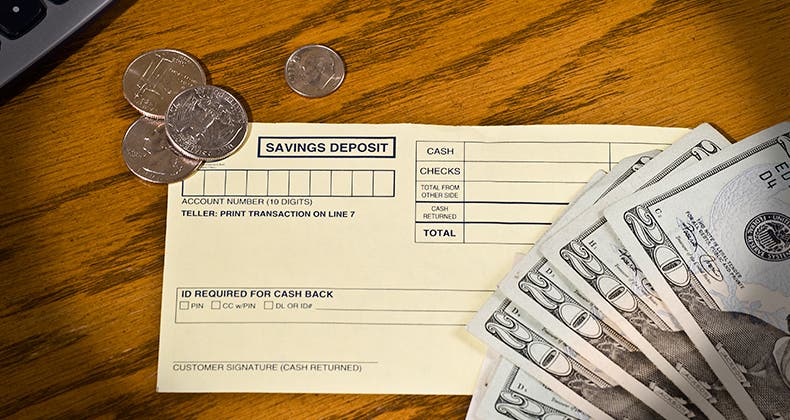
Then again, mutual funds and life insurance don’t exist in the shoebox in your closet. According to a2014 Harris Poll, half of Americans say their trust in banks has declined in recent years. Keeping too much of your money in savings could mean missing out on the chance to earn higher returns elsewhere. Anything over $250,000 in savings may not be protected in the rare event that your bank fails. According to the Bureau of Labor Statistics, the average American household spent $61,334 in 2020. It could also make sense to keep a buffer in checking if you’re worried about incurring overdraft fees.
In fact, it’s not an exaggeration to say the greater the amount of cash at home, the greater the risks involved. On the other hand, if someone were to steal the money you were keeping at home, would you be able to get it back? If you’ve ever seen or heard advertisements for different banks that say FDIC insured, this is what they are referring to. In the rest of this article, I’m going to cover a few of the main reasons you should keep your money in the bank. Are you wondering whether it’s smarter to keep your money in the bank or at home?

Our editorial team does not receive direct compensation from our advertisers. When you keep money at home, not only do you have to cash every paycheck you earn, but you also have to have the discipline to set aside your savings and leave it be. So, without ever having to drive to the bank to cash or deposit a check, you can increase the amount of money in your savings account. Just because you put your money in the bank, does not mean you will earn interest. Or, if you do earn interest, many bank accounts don’t earn enough to keep up with inflation.
Others, however, may implicitly trust their banks but not the world around them. After roughly two years of falling interest rates, APYs are finally on the rise. If you’ve been using the same bank since before the pandemic, your money might be better off elsewhere. To find out, carefully compare traditional and online banks to find the best interest rates for checking, savings, money market and CD accounts. “Needs” are all of the expenses you need to pay to maintain a basic standard of living.

In other words I could have thousands of dollars in my account but only have access to a small percentage of it today. There are many reasons for this, but consider that most banks don’t keep a lot of paper currency on hand to begin with. If a handful of people were allowed to empty out their accounts today, the bank would run out of cash quickly. Bankrate follows a strict editorial policy, so you can trust that we’re putting your interests first.
A fire, flood or other event beyond your control could destroy paper currency, or thieves could steal it during a break-in. And if you were to pass away, the cash you intended your loved ones to receive might remain undiscovered. A budget is an estimation of revenue and expenses over a specified future period of time and is usually compiled and re-evaluated on a periodic basis.



No comments:
Post a Comment